Simi Valley gets most of its rain in a short winter stretch, and the city itself says every property here sits in some flood zone, so a roof that handles a dry Santa Ana summer can still be caught off guard by one hard storm. The window to walk a roof and fix what's found is before that storm arrives, not during it. A short sequence, done in order, covers what actually matters before the wet weeks settle over the valley.
Clear Gutters First
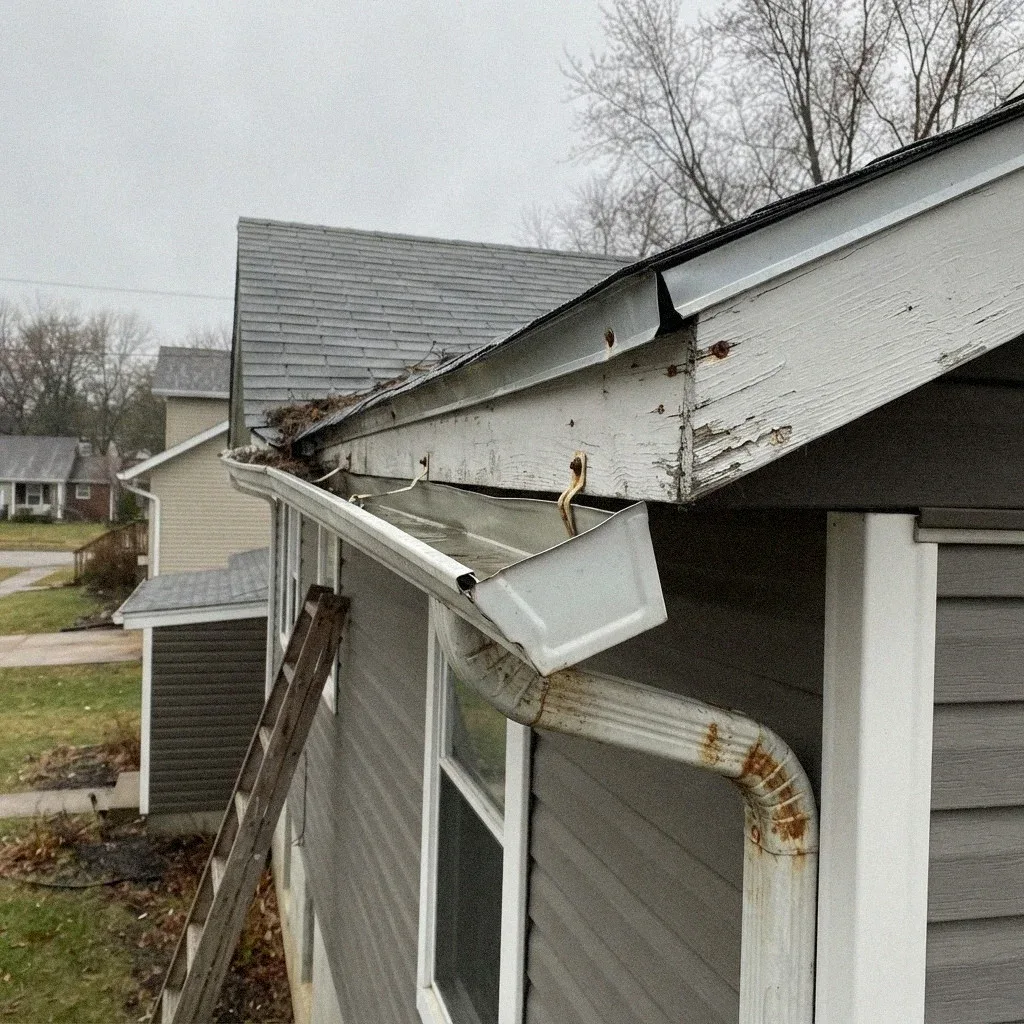
Gutter clearing is the first step because every other check depends on water actually reaching the ground instead of pooling against the roofline. Homes near Tapo Canyon or the Santa Susana Mountains foothills tend to catch more dust and dry brush debris than flat-tract lots elsewhere in Simi Valley, and a packed gutter during a hard rain sends water backing up under the roof edge instead of off it.
Test Downspout Flow
With gutters clear, run a hose through each downspout and watch where the water lands. It should exit freely at a splash block or extension, not dribble out partway down. A slow or blocked downspout usually means a clog higher up that the gutter clearing missed, and it's worth catching now rather than during the first real storm off the Arroyo Simi drainage system.
Clear Out Roof Valleys
Valleys come after the gutters because they feed them, and a valley cleared into a blocked gutter has moved the problem rather than solved it. Work from the top of the channel downward, lifting debris out rather than pushing it along, and get down to the metal so it can be looked at while it is visible. Rusted metal, or a course lifted along either edge, is worth noting now: it is far easier to deal with in September than to discover in December from a stain on a ceiling.
Walk Every Roof Slope
This is the step to be honest about, because on most Simi Valley houses it is not a homeowner job. Every slope needs looking at, not only the one facing the street, and the west-facing side is usually the worst of them since it takes the afternoon sun. What is being looked for is lifted or missing pieces, cracked tile, exposed fasteners, and any course no longer sitting flat. On tile that means somebody who knows where to put their weight, because the price of learning is a cracked tile and a fresh leak.
Check Flashing Points
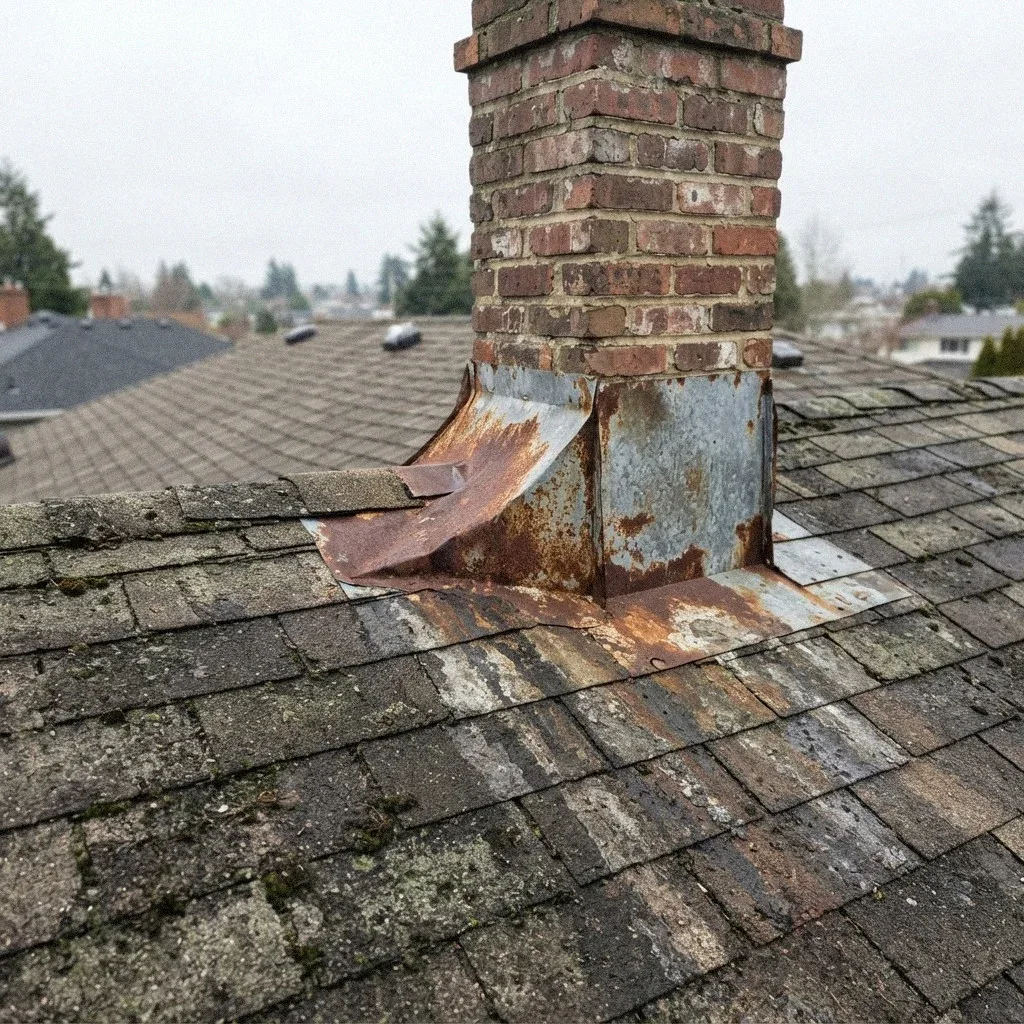
Flashing is where roofs leak, so this is the step that turns up most of the real problems. Every place the roof meets something else wants a look: the sides and base of the chimney, any dormer or wall junction, skylight curbs, and the valleys already cleared. What matters is whether the metal sits flat and tight, whether any piece has lifted or rusted through, and whether the sealant along a chimney base has hardened and cracked. A gap here does not need much rain at all to matter.
Look At Sealant Spots
A sealant check means looking at every point where a fastener, vent, or fixture breaks through the roof surface. Sealant shrinks and cracks with age, especially on south-facing slopes that take the fullest afternoon sun. A hairline gap here won't show anything on a dry day, but it's exactly the kind of spot that lets water in once a real storm rolls through.
Check The Attic Space
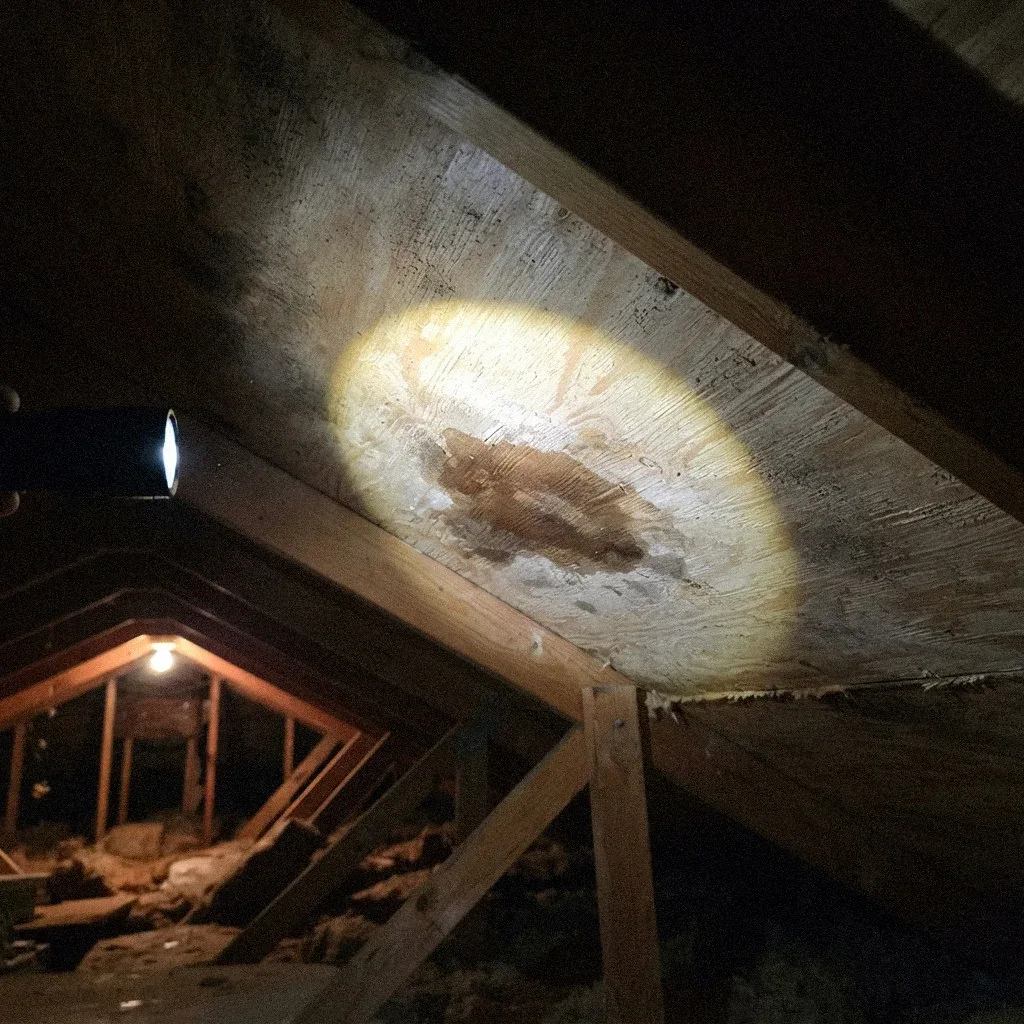
An attic inspection from inside catches what the roof surface won't show. Look for water staining on the underside of the decking, daylight showing through at a seam, or damp insulation near a vent or chimney chase. These spots usually line up with whatever the exterior walkaround flagged, so it's worth checking the attic against that same list rather than as a separate step.
Confirm Grade Drainage
The last step happens on the ground, and it is the one most often skipped. Water leaving a downspout has to go somewhere, and if the ground beside the house slopes back toward the foundation then the roof has done its job and the site is undoing it. Look for soil that has settled against the wall, splash blocks that have shifted out of line, and extensions stopping short. None of this is roofing work, but it is the difference between a downspout that solves a problem and one that relocates it.
Write A Short Punch List
After the walkaround, write down what was found in the order it turned up: a valley that needs a second pass, a pipe boot with cracked rubber, a downspout that drained slowly. A short punch list like this keeps the follow-up focused and makes it easy to explain exactly what needs attention when scheduling any of the fixes.
Choose A Scheduling Window
The practical window for handling anything on that punch list is before the rain settles in, since demand for roof work across Simi Valley and nearby Moorpark and Thousand Oaks tends to pick up once the first storm hits the news. Booking a look before that stretch means the work happens on a dry roof instead of a wet one.
Know When To Call Someone
Most of this walkaround works fine from a ladder at the gutter line and eaves. Anything that means standing on the roof surface itself, especially on a steep tile roof or a hillside lot with a sharp drop-off, is better left to the licensed pros we connect you with, since a fall risk isn't worth saving a trip up a ladder.
Dealing with this in your home?
Simi Valley roofs face a different clock than shaded lots elsewhere. Tract homes off Erringer Road and near Rancho Simi Community Park sit exposed under direct sun for decades, with Santa Ana winds testing every loose tile between First Street and the Santa Susana foothills. Red flag warning days push that timeline faster than most homeowners expect.