In Simi Valley, a roof rarely fails across an open field of tile or shingle. It fails at a seam — somewhere two materials meet, or a flat surface turns a corner around something. After years of Santa Ana winds and baking valley heat, those seams are the parts that move, crack, or pull loose first, long before the roofing field itself gives out.
Pipe Boots and Roof Penetrations
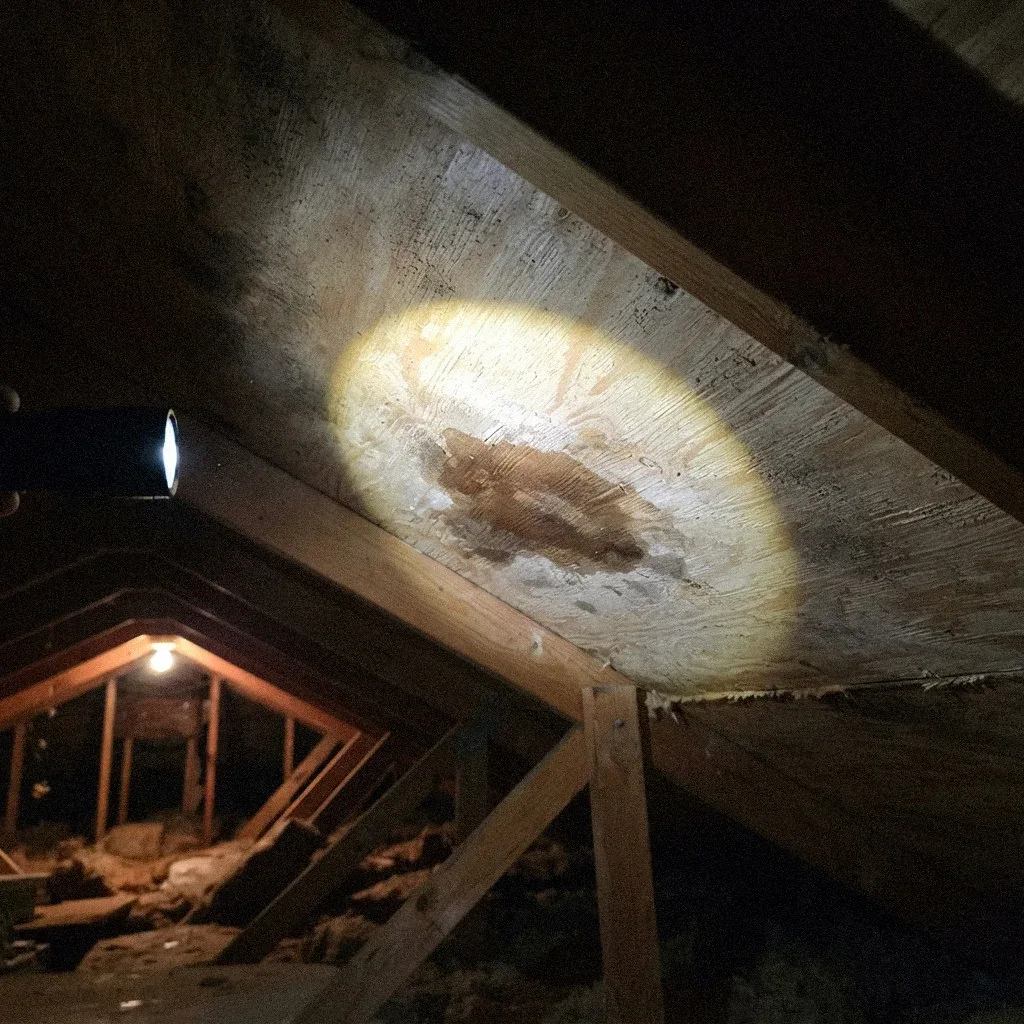
Every pipe, vent, or roof jack that pokes through a Simi Valley roof deck needs a pipe boot, a molded collar sealed around the pipe and tucked under the surrounding tile or shingle. Sun exposure through long dry stretches breaks down the rubber faster than most homeowners expect, and a cracked boot lets water track straight down the pipe into the attic during the next hard rain.
Valleys Where Two Slopes Meet
A valley is where two roof planes drain into a single channel, and on the hillside lots common in Wood Ranch and Bridle Path, multiple gable intersections mean more valleys carrying more concentrated runoff. Debris from nearby canyon vegetation or wildfire ash can dam a valley during a short, intense winter storm, forcing water sideways under the tile instead of down the channel.
Headwall and Sidewall Flashing
Where a roof slope meets a wall head-on, headwall flashing catches the water; where it runs alongside a wall, sidewall flashing and step flashing handle it instead. On older tract homes near Old Town or Santa Susana, these metal pieces were often installed decades ago, and years of expansion and contraction in the valley heat can pull the flashing away from the wall surface just enough to open a gap.
Chimney Counterflashing Gaps
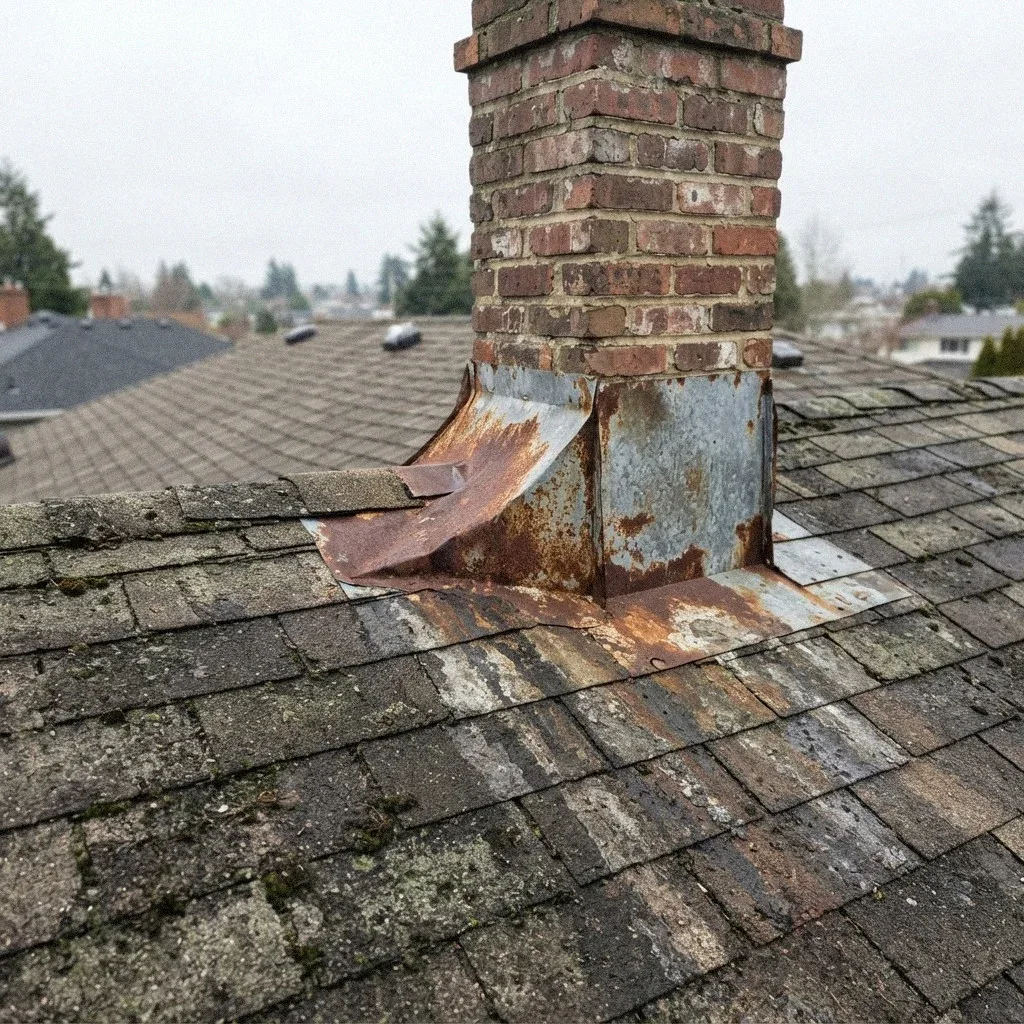
A chimney relies on base flashing against the roof and counterflashing set into the masonry above it, lapped so water can't work backward underneath. Masonry chimneys shift slightly with seasonal ground movement, and once that shift opens the counterflashing joint, wind-driven rain during a storm off the Santa Susana Mountains can push straight into the gap.
Skylight Curb Seals
A skylight sits on a raised curb, with a flashing kit fitted to that specific curb, roof pitch, and skylight model. In homes throughout Tapo Canyon and the Presidential Tract, skylight seals that have baked under direct sun for fifteen or twenty years are a common weak point, since the sealant dries and shrinks well before the skylight glass itself shows any wear.
Kick-Out Flashing at Wall Ends
Kick-out flashing sits where a sloped roof meets a wall at the low end of a step flashing run. Without it, water runs behind the siding instead of into the gutter. Homes around Wood Ranch and Bridle Path with dormers or two-story wall breaks depend on this small diverter. Skip it, and stucco or siding near the roofline soaks up water for years before a stain ever shows up inside.
Loose Fasteners Open Gaps
Anywhere a roof plane runs into a taller wall, a second story, or a chimney mass, that joint needs step flashing woven course by course, tied into counterflashing set into the wall surface above it. Sidewall flashing handles the long runs; headwall flashing handles the top edge where the roof dead-ends into the wall. On the hillside lots around Wood Ranch and Bridle Path, these transitions take direct Santa Ana wind-driven rain, and a single skipped course is enough to let water behind the wall finish.
Eaves, Rakes, and Drip Edge
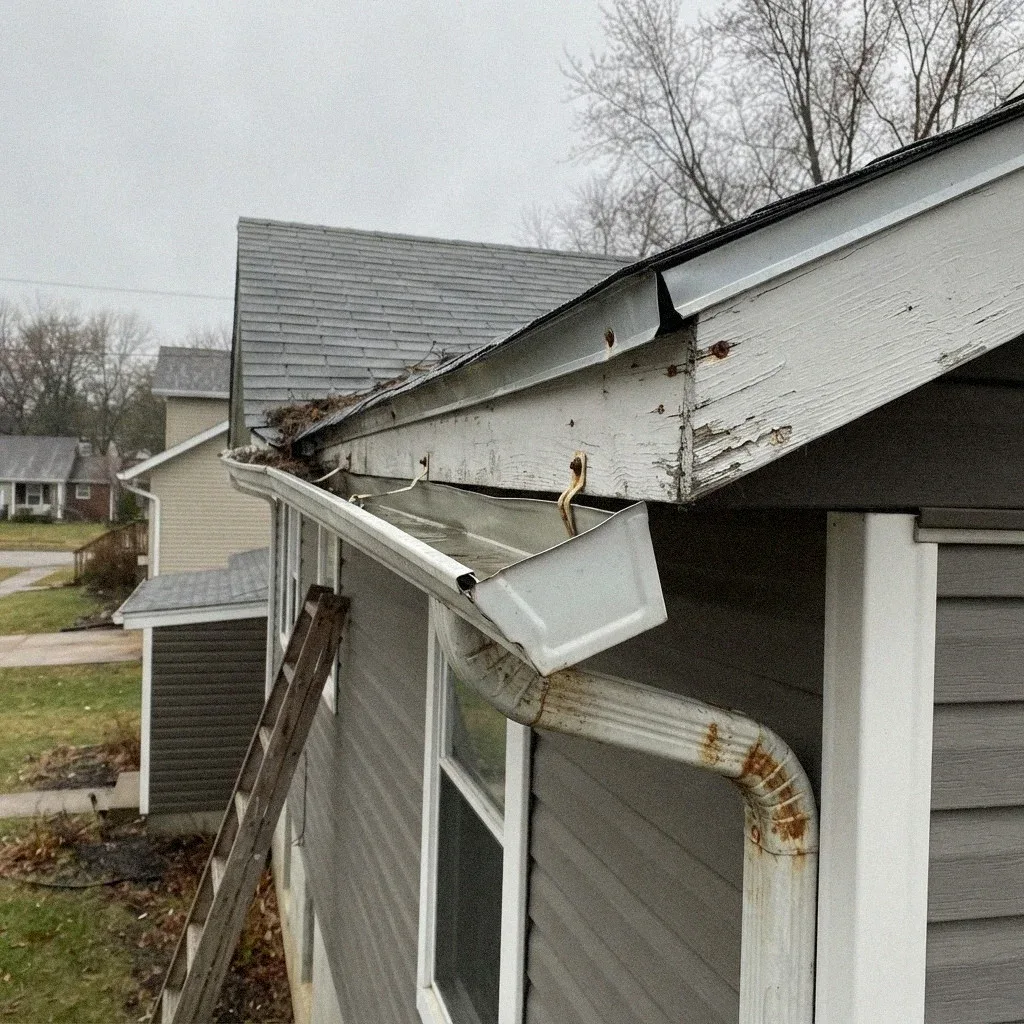
The eave is the lower edge of the roof along the gutter line, and the rake is the sloped edge running up a gable end toward the peak. Drip edge is the metal strip set under the underlayment at the eave and over it at the rake, and its job is keeping water off the fascia board entirely. On older Simi Valley homes near Los Angeles Avenue and the Arroyo Simi, missing or bent drip edge lets water curl backward under the shingle edge instead of dropping clear.
Exposed Fastener Failures
Exposed fasteners are nails or screws driven straight through the roofing surface rather than tucked under an overlap, and they show up on vent flashings, some ridge caps, and clay tile hip and ridge pieces common on Simi Valley roofs. Each one relies on a washer, sealant, or mortar bed that ages faster than the surrounding roof. Years of direct Santa Ana sun and heat cycling dry that seal out, and the fastener hole becomes a standing entry point long before the roofing material around it fails.
Underlayment as the Backup Layer
Underlayment is the sheet material laid across the deck before shingles or tile go down, and it catches water that flashing alone doesn't stop. Santa Ana wind events push rain sideways under tile edges and around penetrations, and that's when this layer matters most. On older Simi Valley roofs, underlayment installed decades ago has usually baked and cracked from years of valley heat, leaving little backup once a flashing point above it starts to fail.
Why These Joints Matter More Than Age
A roof's age tells you less than the condition of its flashing joints. A tile roof from the 80s with intact valleys, sound counterflashing, and working kick-outs can outlast a newer roof where one of those details was rushed. Simi Valley's heat cycling and Santa Ana wind events stress these joints specifically, not the field of the roof, which is why two homes built the same year on the same street can age at completely different rates.
Dealing with this in your home?
Simi Valley roofs face a different clock than shaded lots elsewhere. Tract homes off Erringer Road and near Rancho Simi Community Park sit exposed under direct sun for decades, with Santa Ana winds testing every loose tile between First Street and the Santa Susana foothills. Red flag warning days push that timeline faster than most homeowners expect.